
Describe the affected public route and the operating footprint.
All Work Zone Notes
PUBLIC READY / PROJECT PREPARATION GUIDE
When Is a Traffic Control Plan Required?
A traffic control plan may be needed when work changes how vehicles, pedestrians, or bicycles move through a public area. Start with the actual impact and the responsible agency’s direction; the project label alone does not settle the question.
START WITH THESE THREE POINTS
Bring existing permits, accepted plans, and inspector comments before requesting a new drawing.
Confirm the required plan type and review pathway for the actual location.
Does the work change public movement or access?
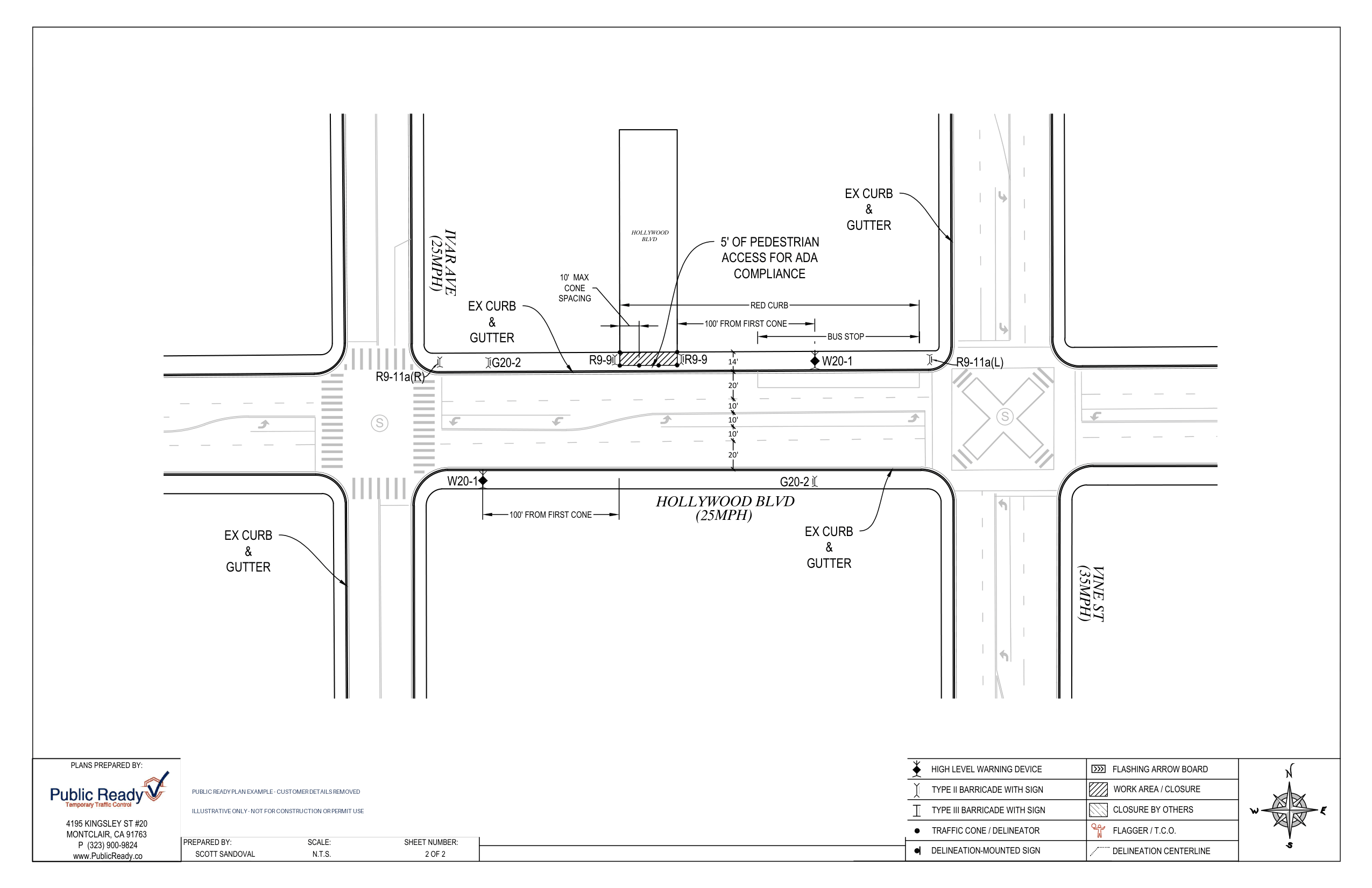
Mark proposed lane restrictions, sidewalk closures or narrowing, curb occupancy, equipment, deliveries, and access to driveways or entrances. Describe setup and removal as well as the active operation.
Work on private property can still affect a public route through equipment reach, deliveries, falling-object protection, or staging. Explain those relationships rather than relying only on the property line.
What do your existing documents already cover?
Review the current permit conditions, accepted drawings, standard details, and agency correspondence. Identify the work limits, dates, hours, and phases those documents cover.
A project may already have applicable direction, or the agency may require a site-specific package or a change to existing documents. Send the available information so the remaining scope can be assessed.
Who can confirm the plan and review needed?
Confirm the road owner and reviewing authority for the exact work location. Ask which documentation and review process apply to the proposed impacts. A mailing address or an equipment name alone is not a jurisdiction determination.
For Los Angeles, LADOT publishes traffic-control plan guidance and a requirement flowchart. Other jurisdictions have their own procedures. Retain the agency’s written direction with the project records.
What should you send for an estimate?
Send the address, cross streets, photos or a marked-up site plan, equipment information, work schedule, public-access impacts, and existing permits or review comments. Mark the details that are still unknown.
Public Ready can assess plan preparation and coordination within the proposed scope. Agency acceptance and field execution remain with their responsible parties. If the question is why requirements differ between locations, use the separate jurisdiction guide.
Official references
Use the responsible agency’s current instructions for the actual project. These references provide context and do not establish authorization for a particular operation.
TURN THE QUESTIONS INTO A SCOPE
Find support for the actual work.
Traffic control plan preparation Why requirements vary by jurisdiction Agency review and revision support
Request a Project Estimate